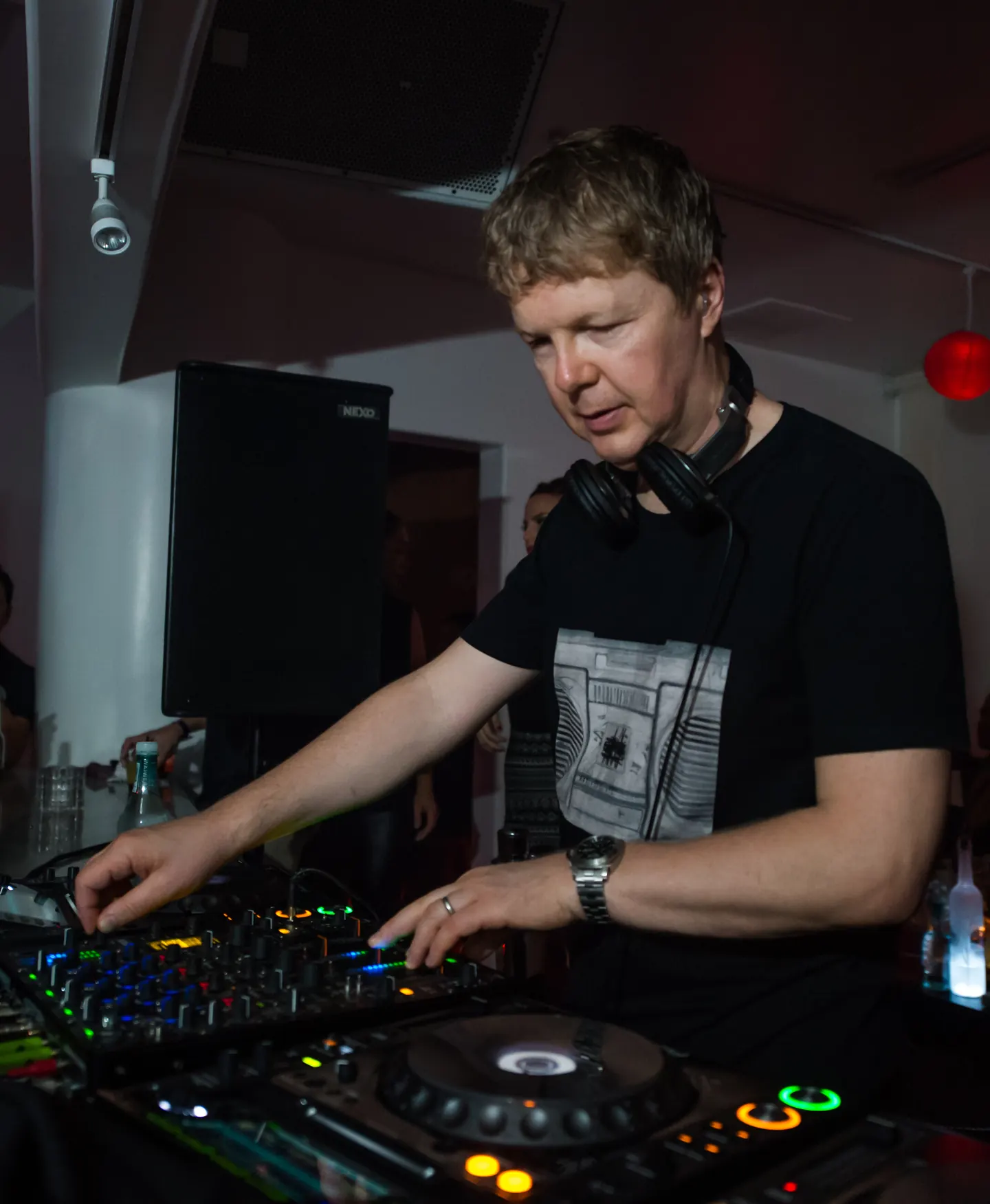
John Digweed’s first Essential Mix opens with “Leyla” by Discorosso 2, then moves through Sounds of Blackness, Björk, Sasha, Yello and BT. Twenty-four listed records cover more ground than his later reputation for dark, hypnotic progressive house might suggest. What already holds them together is patience.
That March 1994 broadcast catches his method before the mythology settles around it. The sound kept changing, while clubs, partnerships, a label and a radio programme gave those changes somewhere to belong. The listener only had to give them time.
Hastings taught him how to build a room
Before the international residencies, Digweed was promoting nights in Hastings. Bedrock began at The Crypt in 1990, where his bookings included Carl Cox, LTJ Bukem, Grooverider and Pete Tong. He later staged an all-night event on Hastings Pier.
Those nights explain something that accounts of his mixing technique can miss. A promoter has to earn trust before asking a crowd to follow unfamiliar music. The job is not only choosing good records. It is giving a room an identity and making people want to return.
The Bedrock name would eventually travel far beyond Hastings, but its basic promise was already there: build the right conditions, then let adventurous music do its work.
Renaissance gave the method a partner
At Renaissance, Digweed’s history became closely linked with Sasha. Their sets treated a whole evening as one musical argument. Ideas could appear quietly, disappear and return much later with more weight.
Renaissance: The Mix Collection gave that approach a durable form in 1994. Across three discs, the club set became something listeners could take home, replay and study. Two years later, Northern Exposure widened the scale again, moving through ambient space, breaks and club momentum without treating the quieter material as a waiting room.
The familiar story that Sasha made one disc and Digweed the other is too neat. Both DJs have described the project as collaborative. Its power comes from the relationship between the two halves and from the sense that rhythm means more after the music has made you wait for it.
The early broadcasts are full of colour
The 1995 Essential Mix is more settled than the debut, but still broad. Young American Primitive, Quivver, Simply Red, Blue Amazon, the Lighthouse Family, Sasha and BT all appear in the published running order. Vocal fragments and recognisable songs sit beside records designed to unfold slowly.
This is progressive house before the label hardened into a narrow formula. Melody is not pushed aside. It is stretched, reframed and made to work across a longer span. Individual records keep their character while becoming part of a larger movement.
Twilo made duration the attraction
Digweed’s 1999 Essential Mix from Twilo brings the archive into one of his defining rooms. From 1996 until the New York club closed in 2001, Sasha and Digweed’s monthly residency became known for nights that could stretch for many hours.
Length alone does not make a set meaningful. What the extended format offered was freedom from constant proof. A passage could remain unfamiliar for a while. A decision could take an hour to reveal its purpose. The crowd learned to hear the night as a whole.
Digweed returned to the former Twilo space in March 2026. The five-hour recording released by Bedrock that July is not an Essential Mix, but it shows how much memory had gathered around the same practice: return to the room, use contemporary music and let history sit in the background rather than reenacting it.
Bedrock became more than a name
By the end of the 1990s, Bedrock meant three related things. It was the production partnership between Digweed and Nick Muir, the label that carried their wider musical world, and the club night where an unusually attentive audience helped test it.
“Heaven Scent” became the obvious anthem, but it was not a solo Digweed record. Muir’s role is part of the story. Together, the pair made music for a room, heard what it did there and brought that knowledge back into their productions and label choices.
This loop between records, club and audience made Bedrock durable. It could keep a recognisable attitude even when the surrounding styles moved from progressive house towards deeper house, minimal and techno.
Heaven gave the institution an address
The October 2002 programme, recorded for Bedrock’s fourth birthday at Heaven, catches that system working. Digweed spoke about playing the venue during its earlier Rage period and about a crowd that came for the music rather than the surrounding scene.
The documented set opens with a Charlie May remix of Bedrock’s “Emerald”. Depeche Mode appears through a Lexicon Avenue treatment, followed by music from James Zabiela, Luke Chable, Atlas, Graffik and Futureshock. Familiar sources become strange again, while newer producers enter a room with its own musical memory.
Heaven matters because the broadcast connects taste to place. The audience helped form the night; the night taught the audience how to follow it.
Start here
Three points in the John Digweed story
5 Mar 1994John DigweedEssential Mixoriginal6 Oct 2002John DigweedBedrock @ Heaven, Londonoriginal29 May 2010John DigweedJohn Digweed's first Studio EM since 1999 & this weekend marks the 300th Edition of his Transitions Radio Showoriginal- The 1994 debut shows the colourful range behind the later reputation.
- The 2002 Heaven recording captures Bedrock as a living club institution.
- The 2010 return shows the method surviving a changed musical language.
Manchester caught the music changing
In October 2007, Radio 1 broadcast Digweed from The Warehouse Project. The Manchester venue was still early in its own history, and the running order places him firmly in a newer moment. Martin Buttrich, Booka Shade, Guy Gerber, PoPoF and Nick Muir point towards a more minimal, techno-leaning vocabulary.
The records rely less on the openly emotional structures associated with 1990s progressive house. Small rhythmic and textural ideas do more of the work. Yet the organising instinct remains familiar: pressure accumulates instead of arriving on command.
The 2010 studio mix makes the continuity even clearer. Two treatments of Dirty Doering’s “Loco” open the programme, allowing one musical idea to change function before the set moves through Darko Esser, Chaim, Loco Dice, Kaiserdisco, Pryda and Slam. Bedrock is still present, but it no longer defines the limits of the music.


Shorter sets require a different economy
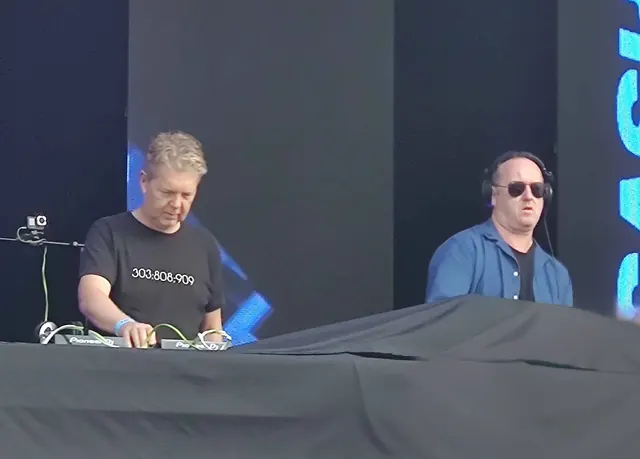
The June 2017 EDC programme is a useful contrast, although the Index correctly preserves it as a shared John Digweed and Lee Foss billing rather than a solo broadcast. Digweed’s section is associated with Tale of Us, Maceo Plex, Swayzak, Scuba, Pig&Dan and Hot Since 82.
A festival appearance has less room for a long detour. The movement becomes more concentrated, but the set does not abandon structure for a row of obvious records. The setting changes the delivery, not the basic belief that one choice should prepare the next.
Radio kept the room open
Transitions extended that belief beyond any one club. The long-running programme created a regular place for new music, guests and shifts within underground house and techno. Where an Essential Mix often captures a particular occasion, Transitions shows the week-by-week work of continuity.
The distinction matters. One archive gives us concentrated historical moments. The other follows the practice between them. Together they explain why Digweed’s world feels larger than a list of headline appearances.
The shared programmes belong to the story
The Index also preserves Digweed inside larger broadcasts, including the 2001 Love Weekender in Newcastle, the 2002 Winter Music Conference programme with Sasha, the 2004 Renaissance event at Shugborough Hall and appearances with Carl Cox, Pete Tong and Judge Jules.
External discographies sometimes separate an individual performance from a multi-artist programme. The Index keeps both relationships visible without turning every segment into a new solo Essential Mix. That is why the connected archive shows 7 direct records and 14 additional shared or event billings.
Thirty years later, the architecture remains
The thirtieth anniversary of Northern Exposure and Digweed’s 2026 return to the former Twilo space arrive from opposite directions. One revisits a recording; the other revisits a room. Neither can reproduce the original moment, and neither needs to.
What survives is an approach to time. The records change, the venues disappear and the technology moves on. Digweed’s promise remains recognisable: stay with the music long enough and it will explain why these pieces belong together.
What the archive keeps
Six directly billed originals run from 1994 to 2010. They catch the early vocabulary forming, Twilo at its peak, Bedrock at Heaven, a changing Warehouse Project set and a mature studio return. The 2023 Classic leads back to the Heaven programme without pretending to be a new performance.
The shared records preserve the partnerships and large events around them. Read together, the archive makes a simple case: Digweed did not keep progressive house alive by freezing its sound. He kept alive a way of listening.
Sources and method
Broadcast dates, billings and counts come from the current Essential Mix Index dataset. It contains 6 directly billed originals, 1 direct Classic return and 14 additional name-bearing shared or event records. Original programmes, replays and Classic broadcasts remain distinct. Musical descriptions use published running orders and programme documentation rather than claiming a fresh audition of unavailable audio.
- John Digweed official site
- Late Night Tales: Northern Exposure Redux
- Resident Advisor: Live at Twilo
- Sound On Sound: John Digweed and Nick Muir on Bedrock
- MixesDB: John Digweed programme records
- MusicBrainz: John Digweed
- Wikimedia Commons: hero photograph and licence

Corrections with supporting sources are welcome at moderator@essentialmixindex.com.