
The Warehouse Project began in 2006 with a useful contradiction. It wanted to become a Manchester institution without behaving like a permanent nightclub. The first run occupied the closed Boddingtons brewery for twelve weeks, ending on New Year’s Day. The deadline was not a footnote. It was the format.
The project could concentrate attention because each season was finite. A building opened, a dense programme arrived, winter acquired a rhythm and then the room disappeared. Repeating that promise across different industrial spaces created a form of continuity that did not depend on the same walls.
The Essential Mix archive catches almost every stage of that evolution. Fourteen original programmes connect directly to The Warehouse Project, and a later Classic broadcast returns to three of the 2007 performances. Together they turn a venue history into a record of how Manchester nightlife kept changing address without losing its audience.
A season, not a nightclub
The original brewery run had no direct Essential Mix record now linked in the Index, but it established the system the later broadcasts make audible: an autumn-to-New-Year concentration of large, unusually varied bills inside adapted industrial space. When the project moved beneath Manchester Piccadilly to Store Street in 2007, the broadcaster arrived almost immediately.
The 30 September launch broadcast placed Krysko, Layo & Bushwacka!, Armand Van Helden and Felix Da Housecat inside one four-hour programme. John Digweed followed two weeks later. Mr. Scruff and DJ Marky with Dynamite MC appeared in December, then David Guetta, Axwell and Pete Tong closed the run before Christmas. The variety is not an exception to a Warehouse Project sound. It is the sound of the format working.
The warehouse was the frame, not the sound
In 2008, deadmau5 and Pete Tong broadcast from Store Street before Swedish House Mafia closed the year. In 2009, DJ Mehdi’s portion of a programme with Busy P began with Nina Simone, then moved through Midnight Juggernauts, Brodinski, Public Enemy and Boys Noize. At Christmas, Pete Tong and Calvin Harris completed another live Warehouse Project programme.
Seen individually, those are simply live broadcasts. Seen together, they document the curatorial advantage of the model. A normal club is often expected to establish a musical identity and defend it. WHP could establish a format instead: Manchester, autumn, temporary industrial space, unusually concentrated bill. Genre could move around inside it.
The licensed visual record
Four sites, one visual argument
A venue that keeps moving needs a different kind of visual history. These publication-safe images show the industrial fabric before and after the parties arrived. Official WHP and interior photography is linked rather than reproduced unless separate permission is granted.
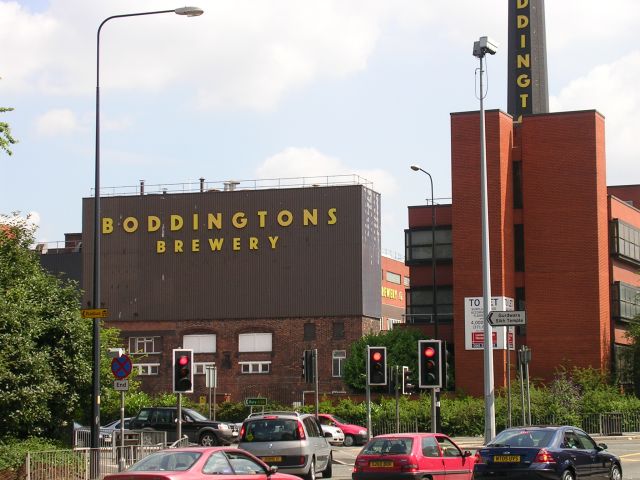


The Warehouse Project’s Twenty Years In Manchester film draws on the official archive. Its footage and stills remain rights-reserved and are therefore not copied here.
“Last ever” became part of the folklore
In 2011, The Warehouse Project announced that Store Street would close after five years. A seventeen-hour New Year’s Day party ended the run. The following season moved to the much larger Victoria Warehouse.
Then Store Street came back. In 2014, after two Victoria Warehouse seasons, WHP announced a return to the arches “for one year only”. The organisers called it a return to their spiritual home and again set a twelve-week season. One year became four. In 2018, a second final Store Street season was announced against the backdrop of redevelopment.
It would be easy to treat those repeated endings cynically. That misses something about the project. Buildings become available, plans change, neighbourhoods are redeveloped and spaces that appear temporary survive longer than expected. “Last ever” became part marketing language, part genuine condition of operating in places whose future was never wholly controlled by a nightclub promoter.
When Essential Mix used WHP to remember itself
Victoria Warehouse changes the scale of the archive. Yousef’s October 2012 broadcast is the first Essential Mix linked to the new location. Its documented sequence begins with Angel Moraes’ “Welcome to the Factory”, then moves through Basement Jaxx, Paperclip People, Carl Cox, Daft Punk and Yousef’s own material.
On 16 November 2013, Radio 1 held the Essential Mix twentieth-anniversary party at The Warehouse Project. Six artist segments from that night were distributed across three weekly episodes: Sasha alongside Pete Tong and Eats Everything; Booka Shade alongside Steve Lawler and Hot Since 82; then Rudimental alongside Paul Woolford and James Zabiela. One programme record remains one programme record. The archive preserves three weekly broadcasts rather than inventing six full Essential Mix episodes.
The relationship went further in Store Street’s final season. On 28 September 2018, WHP hosted 25 Years of the Essential Mix. Highlights became Episode 1285 on 20 October. By then the broadcaster was not merely documenting a venue. It was using the venue to stage its own memory.
Start here
Three broadcasts, three Warehouse Projects
30 Sept 2007Krysko, Layo & Bushwacka!, Armand Van Helden and Felix Da HousecatLive @ The Warehouse Project, Manchester · Episode 724original30 Nov 2013Sasha, Pete Tong & Eats EverythingLive at Manchester's Warehouse Project 16 November 2013 · Episode 1035original29 Nov 2025Barry Can't SwimLive @ The Warehouse Project, Manchester. Beginning with a stunning live show including strings, and ending with a thumping DJ set which closed the night in the main room · Episode 1636original- The 2007 launch captures the Store Street relationship beginning across four very different selectors.
- The 2013 anniversary programme shows WHP large enough to host the Essential Mix’s own twentieth birthday.
- Barry Can’t Swim in 2025 documents a live-PA-to-DJ-set hybrid inside the Depot Mayfield era.
Mayfield turns movement into scale
The Warehouse Project moved to Depot Mayfield in 2019. A 10,000-capacity site inside the former station complex offered a main Depot room, the 360-degree Concourse and the smaller Archive space, whose design nodded back toward Store Street.
There is a temptation to describe that as the same underground warehouse idea simply getting bigger. It is not. A venue with engineered production, multiple programmed environments and internationally significant line-ups is an institution. The romance of finding a temporary industrial shell became a professional operation capable of reshaping that shell around an entire season.
The one original Essential Mix currently linked directly to the Mayfield era is Barry Can’t Swim’s November 2025 broadcast. The first hour is documented as a live performance built around his own catalogue; the second becomes a DJ set. Nearly two decades after the first Store Street broadcast, “live from The Warehouse Project” no longer has to mean one DJ playing a conventional two-hour club set.
The useful myth
The easy story says The Warehouse Project has never had a home. That is not true. Store Street became a genuine spiritual home. Depot Mayfield is no pop-up in any useful sense: it has the infrastructure and scale of a major venue.
The more useful story is that WHP separated continuity from masonry. Boddingtons established the finite season. Store Street proved that repetition could turn a temporary space into ritual. Victoria Warehouse showed that the concept could survive a major change of scale. The Store Street return showed how strongly a room could still matter. Mayfield finally gave the mobile institution enough space to behave like the thing it had gradually become.
The buildings keep disappearing from the sequence. The Warehouse Project does not. That may be its most durable contribution to club culture: the idea that a great venue can be a promise people return to, even when the address changes underneath them.
Sources and image rights
Venue chronology was checked against The Warehouse Project’s own twentieth-anniversary material, DJ Mag and Resident Advisor reporting. Broadcast billing, dates and source types come from the current Essential Mix Index dataset. Fourteen original WHP-connected programmes are joined by one later Classic archive record. Every photograph reproduced here has a verified Creative Commons licence.
- The Warehouse Project official site
- DJ Mag: The Warehouse Project celebrates twenty years
- Resident Advisor: final Store Street party
- DJ Mag: the Store Street return
- Twenty Years In Manchester — official film
- Wikimedia Commons: Depot Mayfield and Mayfield Park
- Wikimedia Commons: Strangeways Brewery
- Wikimedia Commons: Manchester Mayfield, 2007
- Wikimedia Commons: Depot Mayfield exterior, 2020