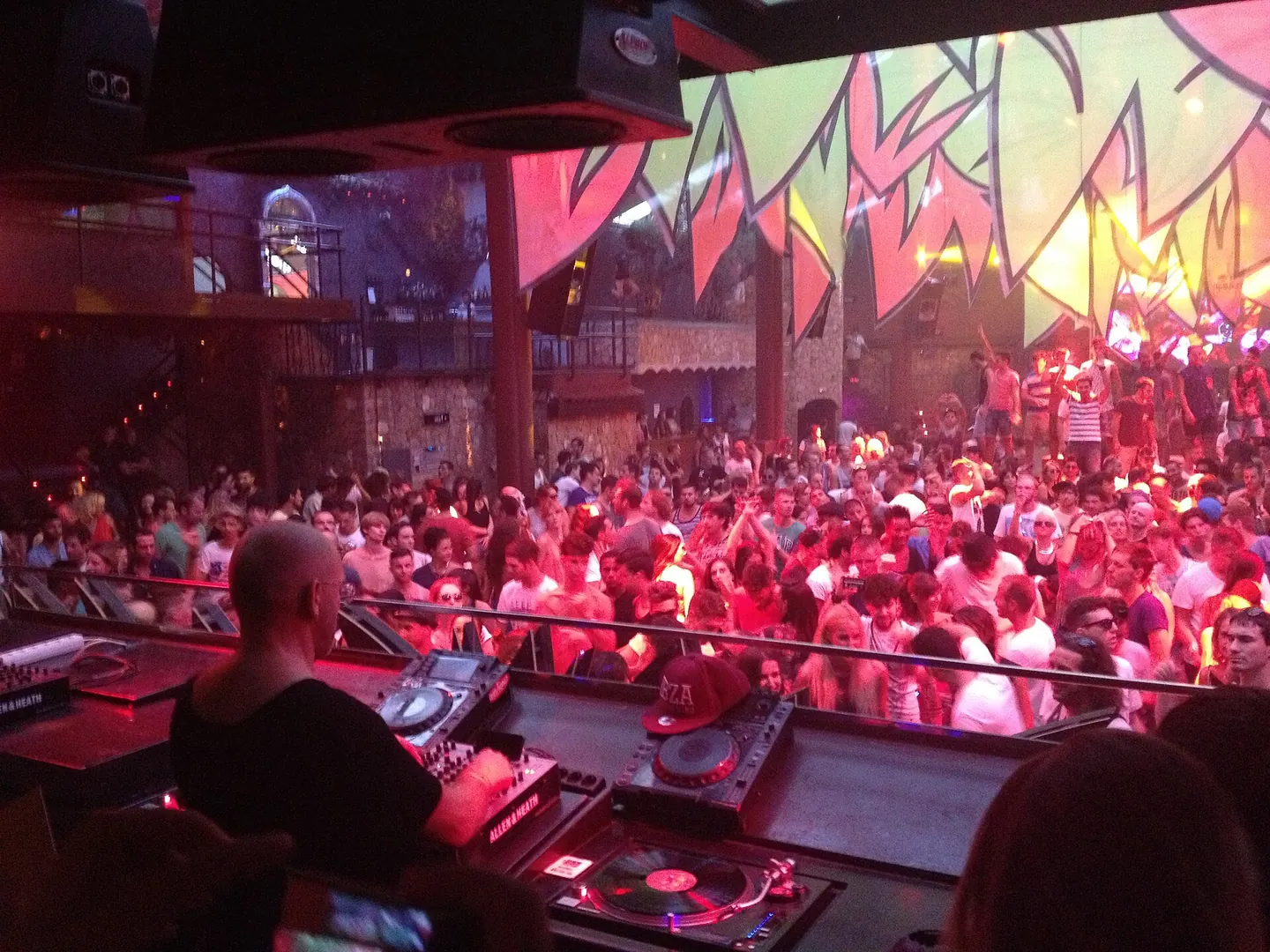
Sven Väth’s first Essential Mix begins with Carl Craig and Robert Hood. What follows is a demanding, wide-ranging selection from a DJ still closely tied to Frankfurt’s Omen. Cocoon’s Ibiza residency and record label were yet to come. In April 1997, the future was still packed into the record bag.
The programme is an inviting way into a career often reduced to a few familiar images: vinyl, extravagant gestures, long nights and the nickname Papa Sven. Behind the personality was a more patient achievement. Väth gave people reasons to return to the same dancefloor, then kept finding new music worth returning for.
Frankfurt before the legend
Berlin dominates many accounts of German techno, but Frankfurt had its own network of clubs, shops, labels and producers. Väth moved through that world before techno became his defining public identity. He played at Dorian Gray, the club at Frankfurt Airport, and tasted international pop success with OFF’s “Electrica Salsa”. Entertainment and underground experimentation were already part of the same working life.
In 1988, he opened Omen with Michael Münzing and Matthias Martinsohn in Junghofstraße. In his recollections for GROOVE, Väth describes renovating the former Vogue premises and gradually making house and techno central to the club. The room’s identity grew through repeated nights, with residents and visitors learning what they could ask of one another.
That history helps explain the confidence of the 1997 broadcast. Carl Craig, Robert Hood, Claude Young, Alter Ego, Acid Jesus, Adam Beyer, Move D and Planetary Assault Systems all appear in the documented running order. Their music does not share one texture or one idea of rhythm. Väth makes the differences part of the selection’s range.
This was a programme from the Omen years, not a recording documented as having been made inside Omen. Its connection to the club is cultural: a DJ bringing the habits of a knowledgeable, adventurous room to a much wider audience.
The farewell spilled into the street
Omen closed in October 1998. The club’s memorial history recalls a three-day farewell, with crowds eventually filling Junghofstraße. Traffic was stopped, an emergency exit opened and speakers moved outside. For a few hours, the surrounding street became an extension of the room people were losing.
The closure removed an address, but the community and Väth’s wider work remained. Eye Q and Harthouse had helped establish Frankfurt’s electronic sound beyond the city. His next major residency would take that experience to an island with a very different club economy.
Mondays had to be earned
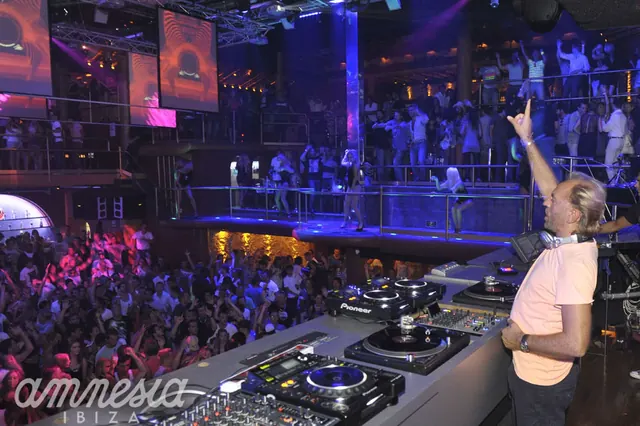
Cocoon began at Amnesia in 1999, with its first night on 19 July. In later interviews, Väth remembers four initial events used to test the idea. The Monday residency entered an island already full of established attractions. It needed an audience of its own.
The setting gave techno a different kind of space. Over time, Väth, Richie Hawtin, Ricardo Villalobos and other regulars helped make Cocoon a night with several musical centres. The Main Room and Terrace offered different energies, and moving between them became part of the experience.
A residency can do things a one-off appearance cannot. Visitors learn the room’s habits, residents take longer risks and a guest arrives inside an existing conversation. A Monday night becomes a recurring appointment between people who need not know which records will be played to know why they want to be there.
The club and the morning after
The 2002 Essential Mix with Richie Hawtin turns that experience into a radio idea. Pete Tong’s introduction explains the arrangement: Väth’s first hour draws on the Amnesia dancefloor, while Hawtin takes the programme towards the afterparty.
The two sections give the night different clocks. Väth’s documented choices include Thomas Schumacher, Tony Rohr and Scan X. Hawtin’s section moves through Dettinger, Jeff Samuel and Robag Wruhme, with a more stripped-back approach to space and repetition. The contrast asks the listener to picture how music changes when the main event has given way to something smaller and less hurried.
It remains one shared programme. The pleasure lies in the relationship between its halves, rather than in treating each hour as another solo entry on a list.
Start here
Three ways into Sven Väth
6 Apr 1997Sven VäthEssential MixOriginal programme10 Nov 2002Sven Väth & Richie HawtinSven Väth (The Club) Richie Hawtin (The Afterparty)Original programme30 Jan 2021Sven Väth20 Years of Cocoon RecordsOriginal programme- Begin in 1997 for the Frankfurt-era selection before Cocoon became central to the story.
- Try the 2002 programme with Hawtin for the journey from the club to the afterparty.
- Choose 2021 for a label history that reaches back to Väth’s pop beginnings.
A label becomes a shared memory
By 2015, Väth could use an Essential Mix to look across a catalogue he had helped build. He explained that the selection would combine older Cocoon releases, current music and forthcoming records. Minilogue, Guido Schneider and André Galluzzi, UNER, Dana Ruh, Ilario Alicante and Gregor Tresher appear alongside an Adam Port reworking of his own “Ritual of Life”.
The shift from 1997 is revealing. The earlier programme catches a DJ choosing from the underground around him. The later one surveys a musical network that has become part of that underground. The label gives other producers a route into the room, and the room gives their records a history.
The programme is best understood as a label portrait, not a live recording from an unspecified Cocoon party. Its running order also includes releases associated with other labels, a reminder that a musical family rarely fits neatly inside a catalogue boundary.


“Electrica Salsa” comes back
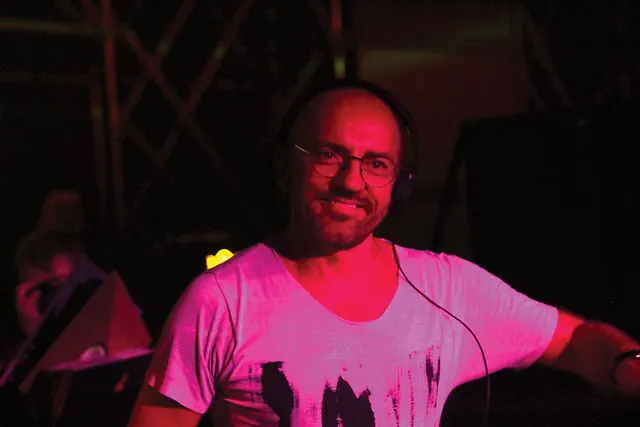
The 2021 Essential Mix opens with a Roman Flügel remix of OFF’s “Electrica Salsa”. Väth’s early pop success returns inside a programme celebrating twenty years of Cocoon Recordings. It is a small, useful surprise: the career before techno has not been airbrushed away.
The published selection moves through DJ Koze, Ricardo Tobar, Minilogue, Cobblestone Jazz, Guy Gerber, Joris Voorn, Legowelt, Pig&Dan and Extrawelt. House, intricate electronics and more forceful techno coexist. The range shows how much the label’s musical world had expanded, while the opening makes the longer personal history audible within it.
It also resists the idea that an anniversary has to be a procession of old favourites. New contexts can change familiar records. A remix can bring an earlier version of an artist into conversation with the person he has become.
The community travels
The wider archive follows Väth beyond his directly billed programmes. The 1999 Love Parade broadcast places him alongside Carl Cox. Cocoon appearances with André Galluzzi keep the Ibiza residency visible, while the 2007 Global Gathering billing brings him together with David Guetta, Erol Alkan and Paul van Dyk.
These are different settings for different audiences. A shared festival programme offers a brief encounter; a residency builds familiarity over a season. The archive preserves both without turning an entire event bill into a solo set.
Väth’s attachment to vinyl is another visible form of continuity. Choosing, carrying and handling physical records makes preparation part of the performance. It does not make a DJ adventurous by itself. What matters is the choice, the moment and the response of the room.
Returning without standing still
Cocoon’s official announcement for 19 July 2026 marked twenty-seven years since its first Amnesia night. Väth and Hawtin appeared on the announced bill alongside Nina Kraviz, Len Faki, Dana Ruh and Mateo Dufour. The date looked back, while the line-up brought several generations into the same frame.
The Essential Mix offers a similarly selective view. Three direct originals, widely separated in time, let us compare the Frankfurt DJ, the label curator and the artist taking stock of a much longer history. The 2003 replay and 2025 Classic return to his 1997 recording; they are later broadcasts of earlier work.
Omen is gone and the residency has changed, but the invitation is familiar. Come back, bring your curiosity and let the records lead somewhere you could not have planned. That is the ritual Väth made durable.
Sources and method
Counts and historical billing come from the current Index: 3 direct originals, 1 direct replay, 1 direct Classic and 6 further shared or event records. The 2003 replay and 2025 Classic return to 1997; the 2020 shared Classic returns to the 2002 Hawtin programme. Track descriptions follow published running orders, not a claimed fresh audition of every recording. The 2026 anniversary is described from its official announcement, without invented details of the night.
- Cocoon: Sven Väth biography
- GROOVE: Sven Väth on Frankfurt and Ibiza
- Omen memorial: the club’s history and farewell
- Cocoon / FOCUS: Amnesia at fifty, interview with Sven Väth
- Cocoon: the 27th-anniversary Amnesia announcement
- Essential Mixipedia: the shared 2002 programme and presenter introduction
- 6AM: Väth’s explanation of the 2015 label selection
- MixesDB: 2021 anniversary running order
Image sources and licences are linked in each caption. Corrections with supporting sources are welcome at moderator@essentialmixindex.com.