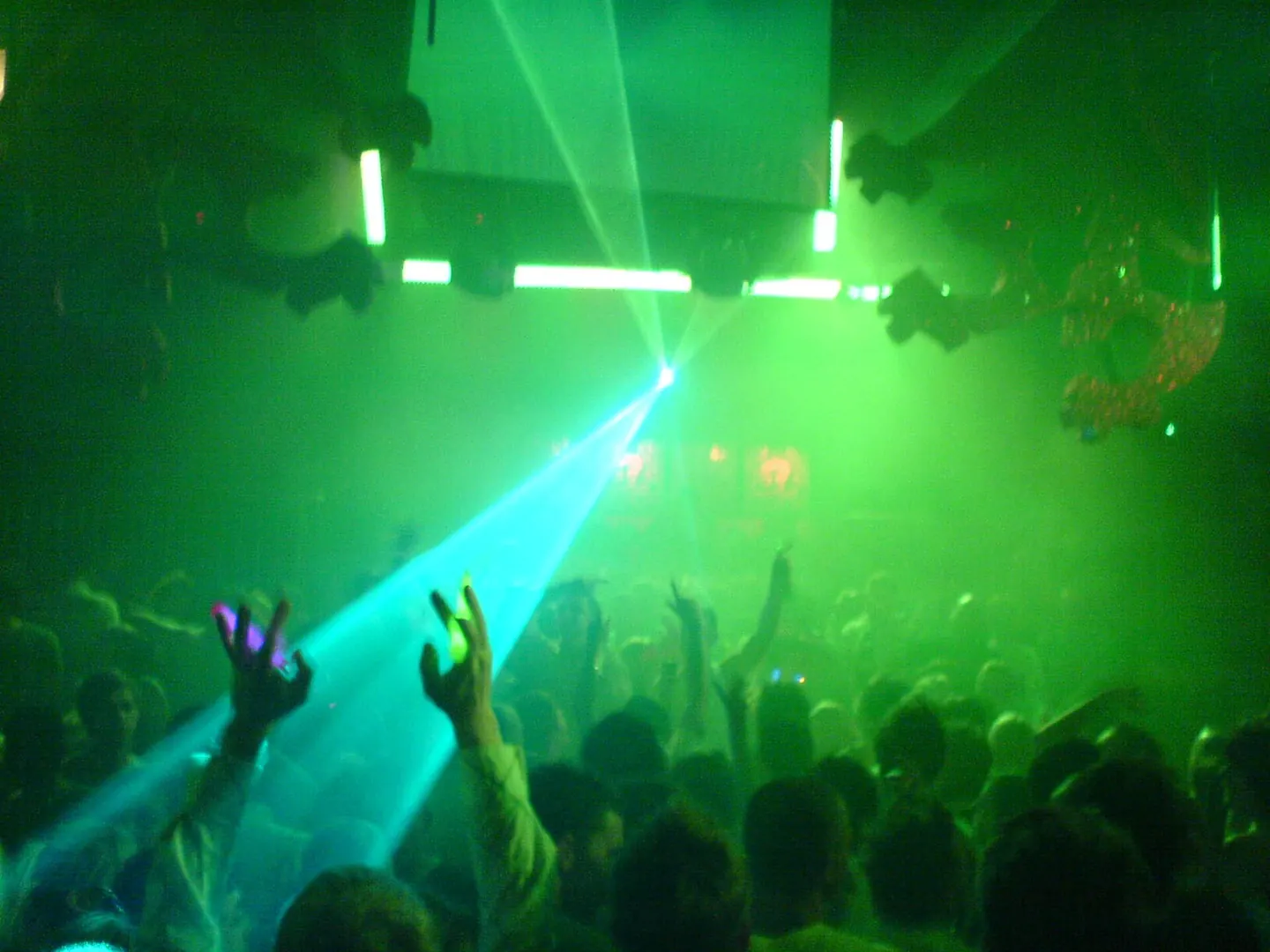
Gatecrasher was a night people prepared for long before they reached Sheffield. The clothes, the journey and the expectation all belonged to it. Inside the Republic, trance became something a crowd could wear, recognise in one another and carry home.
That is the image that survives most vividly: fluorescent colour, lasers, the lion emblem and a room waiting for the next release. The Essential Mix connections complicate it in a useful way. Alongside the familiar trance names, they preserve house, techno and the growing ambitions of an event that soon needed more space than one club could offer.
The Republic gave the night a home
Gatecrasher began in 1993 around Simon Raine and DJ Scott Bond. After moving through venues, it established a permanent Sheffield base at the Republic on Matilda Street in 1997. The former industrial building gave a developing club identity an address people could return to every Saturday.
The setting mattered. Sheffield’s manufacturing past was still present in the structure, while sound and lighting suggested a different future. A club could feel rough-edged and spectacular at once. For visitors arriving from other cities, the destination became as important as the DJ on the flyer.
The first explicitly labelled Gatecrasher programme in the Index was broadcast in December 1997, with Pete Tong and Seb Fontaine. It catches the night before its popular image had settled into a single shorthand. Radio could take the club’s name beyond the people able to make the journey.
The crowd made itself visible
The Crasher Kids gave that identity a recognisable look. Colour, customised clothes and exaggerated accessories made dressing for the night part of participating in it. The effect depended on other people making the same effort: a roomful of individual decisions became a shared visual language.
A contemporary eFestivals review of Summer Sound System in 2000 notices that audience immediately. Its description of brightly dressed clubbers is useful evidence that the look was already part of Gatecrasher’s public identity, rather than something invented by later nostalgia.
The appeal was social as well as musical. Knowing the records, recognising the regulars and returning after a long journey all gave the event continuity. The crowd helped make trance feel like a place to belong, even for people whose everyday lives were far apart.
Outside, the musical world grew wider
Lotherton Hall near Leeds takes the story outdoors. External discographies locate the June 1998 Pete Tong and Judge Jules programme there, although the current Index record does not yet include a venue description. The connection is documented here without quietly rewriting the original listing.
The following summer is more explicit. One programme brings Judge Jules, Paul Oakenfold and Tong together at Lotherton Hall. A separate broadcast a week later presents Carl Cox from the Phuture 2000 arena.
Cox’s presence matters to the shape of this history. Gatecrasher’s association with trance was powerful, but an event built around several arenas could hold more than one musical identity. The wider bill let people move between related scenes without leaving the occasion.
That shift has parallels in the Creamfields story. A club’s name could become the organising idea for an outdoor gathering, while radio turned selections from the event into a journey for listeners elsewhere.
Start here
From the club to the open air
14 Dec 1997Pete Tong & Seb Fontaine@ Gatecrasher, SheffieldOriginal programme27 Jun 1999Carl CoxPhuture 2000 Arena – Gatecrasher @ Lotherton Hall, LeedsOriginal programme17 Jun 2001Paul Van Dyk & Judge Jules@ Gatecrasher Summer Sound System in OxfordshireOriginal programme- Pete Tong and Seb Fontaine in 1997 provide the first explicitly labelled Sheffield connection.
- Carl Cox at Lotherton Hall in 1999 widens the picture beyond trance.
- Paul van Dyk and Judge Jules in 2001 connect the club identity to Summer Sound System.
A Sheffield name on a different landscape
By 2000, Summer Sound System had moved south to Turweston Park near Brackley. Contemporary reports describe several arenas, an outdoor Radio 1 stage and a bill stretching from the familiar Gatecrasher headliners to house, drum and bass and more eclectic selections.
The Index’s historical description of the June 2000 broadcast says “Sheffield”. The event announcement, on-site reporting and contemporary review place that year’s festival at Turweston. The distinction is left visible in the archive note below. A brand’s home city and an event’s actual location are not always the same thing.
The 2001 festival grew to eight announced arenas. The Essential Mix pairing of Paul van Dyk and Judge Jules preserves the part of that larger occasion most closely associated with the club’s trance identity. It is one shared programme, not two separate solo broadcasts.
The result is a more interesting picture than a straight line from small club to big festival. Gatecrasher carried a strong identity into spaces where different audiences and sounds could meet. The name held the event together without requiring every arena to sound alike.
The millennium was bigger than one event
The turn of 2000 added another kind of scale. The Essential Millennium programme linked performances from several locations, with Judge Jules and Sasha identified with Gatecrasher in the historical billing.
That connection belongs in the story, but it needs a different reading from the club and festival programmes. The broadcast moves between places; Gatecrasher is one part of its larger map. Counting the two named performers as two new standalone Essential Mixes would lose what made the programme unusual.
The building could not be brought back
A major refurbishment in 2003 renamed the Republic as Gatecrasher One. On 18 June 2007, a fire tore through the building and part of it collapsed. Staff escaped without injury. Contemporary reporting described an investigation into the cause; this account does not assign an unproven point of ignition.
The owners initially promised to rebuild. What followed on the site was different. The original structure was lost, and Gatecrasher Apartments, designed by Cartwright Pickard, was completed in 2016. Its courtyard landscaping includes a turntable reference to the club’s past.
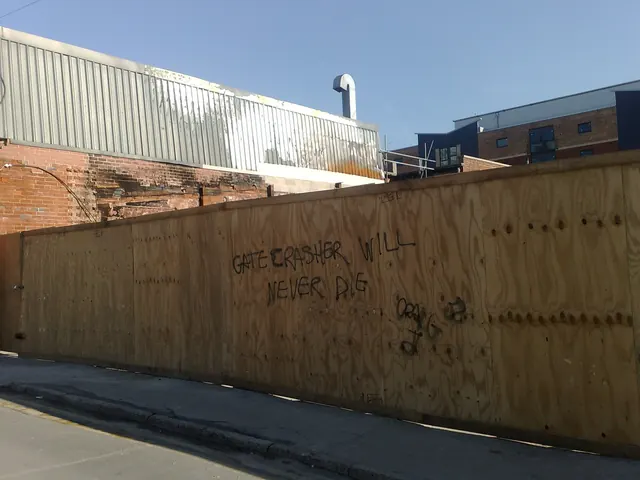

The retained name acknowledges the memory, but the new building is not the old room. Gates, balconies, sightlines, the position of the booth and the habits of a crowd cannot be preserved by keeping an address on a map.
What the archive keeps
Gatecrasher’s broadcasts preserve the culture at several scales: the Sheffield club, Lotherton Hall, the expanding Summer Sound System and the multi-location millennium special. The exact connections are not interchangeable, which is why the archive panel distinguishes them.
Together they reveal a wider musical world than the fluorescent stereotype allows. Trance gave Gatecrasher its strongest public identity, but house, techno, radio and outdoor event culture all helped that identity travel. The room disappeared. The recordings and the people who remember it still give the name somewhere to live.
Sources and method
Seven reviewed relationships comprise 5 explicitly labelled club or festival programmes, one externally documented 1998 recording and one composite Millennium programme. The existing venue card links 6 records, including the composite; the 1998 venue attribution remains an external contextual connection. Original artist billing and the 2000 location text are preserved. Historical and architectural claims were checked against contemporary reports and the sources below. No personal listening impressions or participant anecdotes have been invented.
- The Scotsman: the Republic residency and Crasher Kids
- eFestivals: contemporary Summer Sound System 2000 review
- NME: the 2000 festival announcement
- NME: report from Turweston Park, June 2000
- NME: the 2001 event and its eight arenas
- Pollstar: the June 2007 fire and the owners’ response
- Cartwright Pickard: Gatecrasher Apartments, completed in 2016
- MixesDB: the externally documented 1998 Lotherton Hall programme
Both reproduced photographs have verified reuse terms, linked in their captions. The contemporary architectural photographs remain reference-only. Corrections with supporting sources are welcome at moderator@essentialmixindex.com.