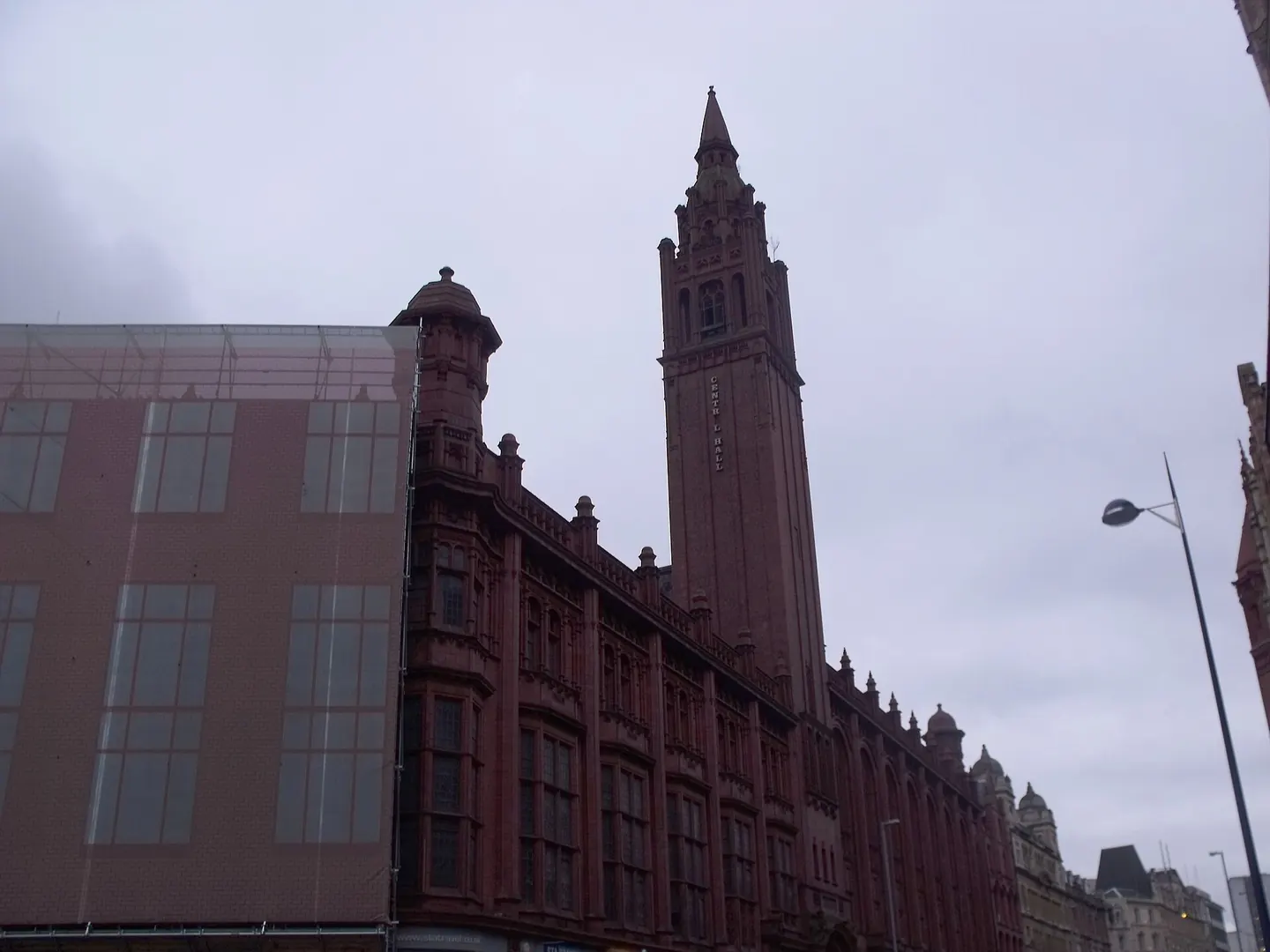
On 4 November 1995, Paul Oakenfold opened from Birmingham’s Que Club with Robert Miles’ “Children”. By the time the Radio 1 broadcast was over, listeners had also heard Pete Tong, Sasha and live appearances by Black Box and E’voke. The programme ran to about four hours. The room had originally been built for Methodist gatherings.
That unlikely setting was part of the club’s appeal. At the Que, a big night could mean a full main hall, but the route between rooms mattered too. A staircase or corridor could take you from the music you had come for to something you hadn’t planned to hear.
How a Methodist hall became the Que Club
Methodist Central Hall opened on Corporation Street in 1904. Ewen and J. Alfred Harper designed a building for public assembly, with a large hall and galleries alongside smaller rooms. The terracotta façade and tower gave it a presence on the street long before anyone queued outside for a DJ. It is now listed at Grade II*.
The club era began in 1989. Some nights used the hall’s scale; others benefited from being able to give smaller rooms over to a different sound. In oral histories collected for Birmingham Music Archive, clubgoers remember moving through its corridors and staircases and finding a different crowd and different records along the way.
House of God and Atomic Jam gave Birmingham techno regular places to gather. Flashback and Miss Moneypenny’s drew audiences from other parts of club culture, while tours brought in live acts including The Chemical Brothers and Massive Attack. Those nights each had a character of their own. What they shared was an address with enough room for their differences.
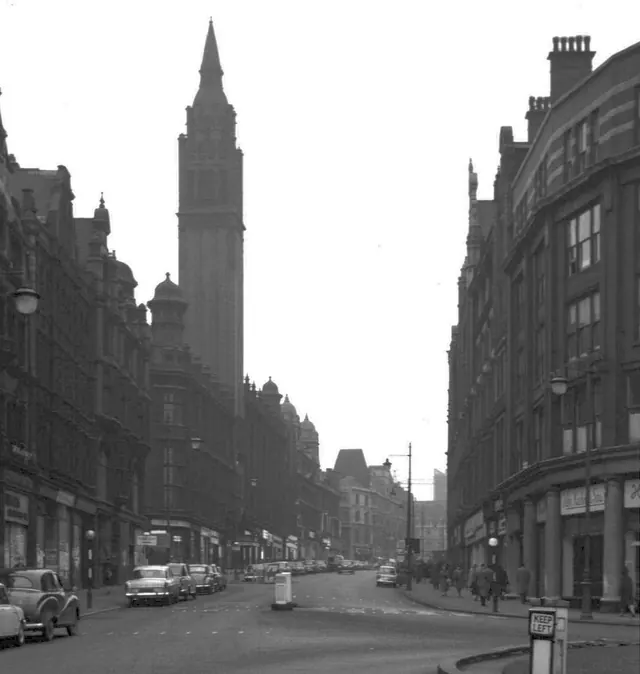

Radio 1 makes room for a whole night
The earliest Que Club programme in the Index, from May 1995, makes a good first visit. Oakenfold’s selections include New Order remixed by Hardfloor; Tong takes the programme towards house, and Sasha’s section includes Speedy J. Danny Rampling is on the bill too, alongside Shiva, Billie Ray Martin and Gerideau. Their live appearances help explain why a list of the headline DJs tells only half the story.
When Radio 1 returned in November, “Children” put a melody at the start of the night that would soon be familiar well beyond clubs. Tong’s selections included Gusto’s “Disco’s Revenge”, while Sasha and the two live acts gave the broadcast other ways to change pace. The shorter Classic played in December 2025 revisits that same night. If you start with the Classic, it’s worth opening the original to see what the longer bill had room for.
The station came back in January 1996 with Pete Tong, Boy George and Paul Bleasdale. Gusto turns up again in the surviving list, this time among records by Bizarre Inc., Gat Decor and Blue Amazon. Exact track orders are harder to reconstruct for that night, but the repeat visits are clear. Within a year, the Que had become somewhere Radio 1 knew it could return to for a different programme.
Start here
Three nights at the Que
28 May 1995Paul Oakenfold, Danny Rampling, Pete Tong, Sasha, Shiva, Billy Ray Martin, GerideauQue Club, BirminghamOriginal programme4 Nov 1995Paul Oakenfold, Pete Tong & Sasha (With Black Box, Pete Tong & Evoke)Live @ Q Club, BirminghamOriginal programme3 Nov 1996Carl Cox@ Q Club, BirminghamOriginal programme- May 1995: start with the live acts as well as the DJs.
- November 1995: hear where “Children” fits in the longer night that the Classic revisits.
- November 1996: take the harder route through the club with Carl Cox.
Carl Cox, Daft Punk and another side of the hall
Carl Cox brought his Ultimatum tour to the Que in 1996. In the November broadcast, DJ Deeon, 3MB featuring Juan Atkins, Ron Trent and Adam Beyer point to a harder night than the previous year’s shared bills. A venue that had already made space for dance music from different cities could hold this kind of set without changing its identity.
Daft Punk left a different record of the hall. They played there on their 1997 tour for Homework, and an excerpt from the Birmingham show became Alive 1997, released in 2001. It’s a live album from a separate occasion, not an Essential Mix. Put beside the broadcasts, it gives another idea of what the building could accommodate.
By September 1998, Radio 1 was back with Sonique and Tong. Her section included Underworld’s “Dark & Long”; Tong played Stardust’s “Music Sounds Better With You”. Those two titles make a useful pair for finding your bearings in the programme. The room had stayed put while the records people danced to were moving on.
Who was on the dancefloor?
In January 1996, the fashion photographer Terence Donovan went to House of God at his son’s invitation. He turned his camera towards the crowd: people dancing, talking or simply taking a moment to look around. The photographs held by the Terence Donovan Archive show the people between the names on the flyer.
The pictures resurfaced during Birmingham Music Archive’s In the Que research. Birmingham Museum & Art Gallery hosted the exhibition in 2022, and the archive’s documentary gathered accounts from promoters, DJs, staff and clubgoers. Radio preserves who played and what records survived on tape. Those recollections explain why people came back.
What comes next for Central Hall?
Birmingham Music Archive traces the wider venue era from 1989 to 2017. That covers changing uses and events, not an uninterrupted weekly club programme. After the music ended, the building deteriorated and was placed on Historic England’s Heritage at Risk register. A hotel proposal did not go ahead, and the hall returned to the market.
Savills confirmed the sale to Civis in July 2026. The new owner proposes restoring Central Hall for performances, exhibitions, education and community use. These are plans, not a reopening announcement, and there’s no confirmed return of club nights. What makes the project worth watching is the possibility of getting people into a building designed for them to gather in.
In the meantime, the broadcasts give listeners a way to return to the Que. Try the November 1995 bill and Cox’s set a year later. The distance between them says more about this particular club than a single greatest night ever could.
Sources and method
The archive links represent five original programmes and one later Classic. Artist billing is preserved as indexed; examples in the story come from surviving running orders. For the 19 May 1996 Carl Cox broadcast, the presenter identifies Colours near Edinburgh despite a conflicting venue field in a secondary listing. That broadcast is excluded from the Que Club total.
The separately released Alive 1997 is also outside the broadcast count. The Donovan photographs are linked, not reproduced. See also Paul Oakenfold’s Essential Mix history and the Ministry of Sound story.
- Historic England: Methodist Central Hall’s Grade II* listing and architectural history
- Historic England: Heritage at Risk entry
- Birmingham Music Archive: In the Que exhibition and oral histories
- University of the Arts London: Terence Donovan’s House of God photographs
- Daft Punk: official Alive 1997 discography
- Savills: sale of Central Hall, 30 July 2026
- Civis: the Central Hall project
- MixesDB: 28 May 1995 Que Club broadcast
- MixesDB: 4 November 1995 Que Club broadcast
- MixesDB: 28 January 1996 Que Club broadcast
- Essential Mixipedia: Carl Cox at the Que Club, 3 November 1996
- MixesDB: 27 September 1998 Que Club broadcast
- Essential Mixipedia: presenter transcript for Carl Cox, 19 May 1996