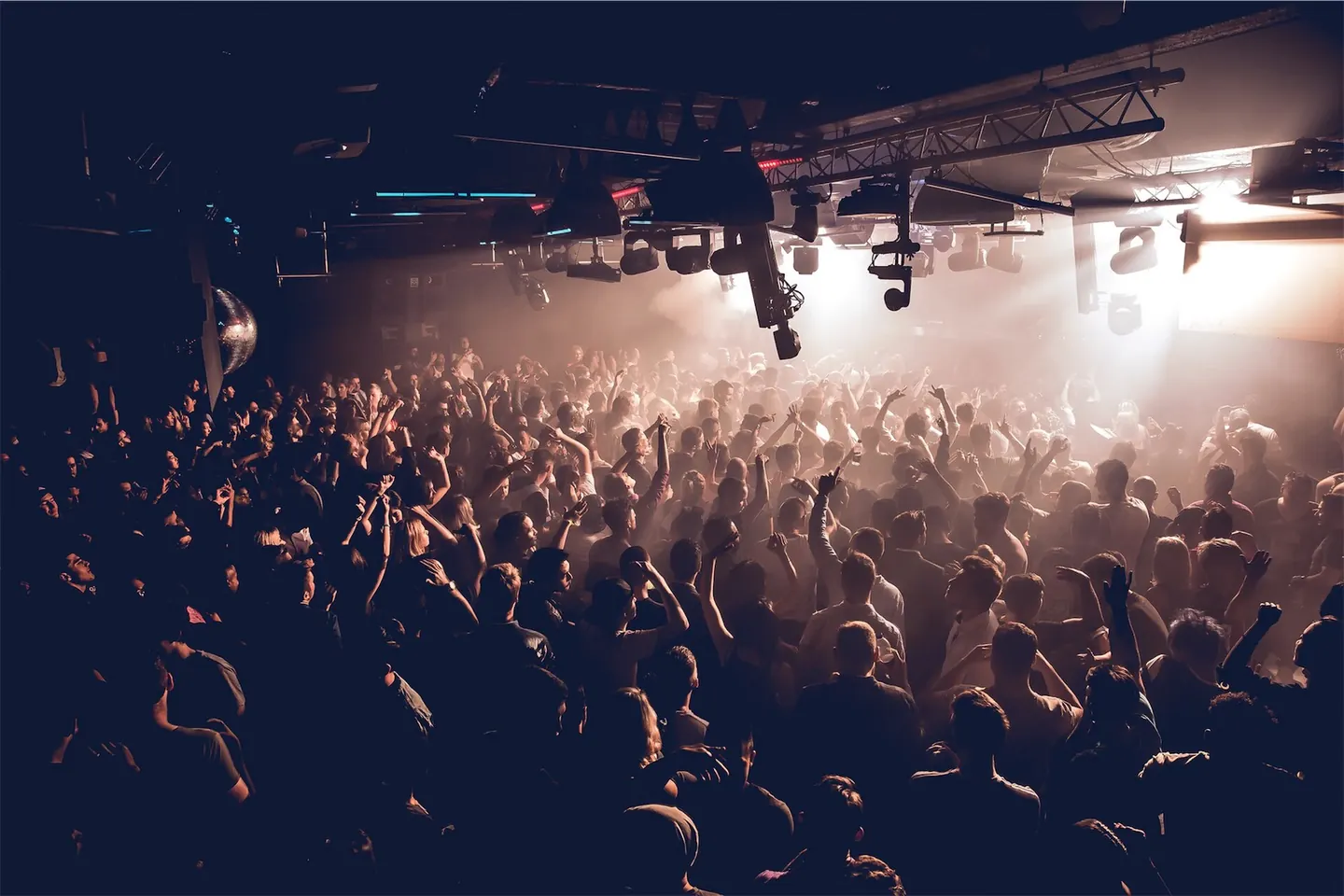
For many people, Ministry of Sound first meant a compilation on a bedroom shelf. For others it meant a journey to Elephant and Castle, a queue on Gaunt Street and the promise of a room built around music. The club came first. Everything else grew from the idea that listening together could be an event in its own right.
The Essential Mix offers a way back into that room without pretending to reproduce it. Pete Tong appears at several points in the story, joined by Seb Fontaine, Junior Vasquez and the musicians of Paraiso. Their broadcasts catch different moments in the club’s life, while the wider archive shows how far its name travelled from the original address.
A New York idea, a London address
Justin Berkmann’s inspiration came from Paradise Garage in New York, where Larry Levan helped make the relationship between records, sound system and crowd the centre of the night. Ministry of Sound opened in September 1991 with a similar priority: give the music a room in which it could matter, rather than treat it as a backdrop to being seen.
The building’s earlier life is less neatly remembered. The venue calls it a former bus garage; Berkmann recalled an office car park in a former tubing factory. What matters to the club story is the conversion of a working building into somewhere people would make a special journey to hear records.
Its main room, The Box, made that ambition tangible. The club’s own retrospective recalls an early DJ booth whose narrow opening left the DJ struggling to hear the room properly. It was rebuilt. Even at a club remembered for its sound system, the relationship between the person playing and the people dancing had to be learned in use.
House music with the doors open
The first Ministry of Sound broadcast currently identified in the Index is Pete Tong on 14 May 1995. Its running order begins with Moraes’ “Welcome to the Factory” and brings together Liberty City, Donna Summer and New Order, alongside a live performance of Shiva’s “Work It Out”. That is a useful introduction to the club’s musical world: house could draw on disco, pop songs and live voices without losing its place on a dancefloor.
For a listener coming to it now, those familiar songs offer an easy way in. Donna Summer and New Order had lives far beyond this particular night; placing them alongside newer club records lets different generations of dance music share the floor. Shiva’s appearance brings a further change of pace, with a live act in the middle of Tong’s selections.
Radio helped make that variety available beyond London. Someone hearing the programme elsewhere could follow the selections without knowing the building, while a regular might recognise the occasion behind them. The broadcast carried a version of the night into homes that the club itself could never reach.
One club could hold several directions
Pete Tong and Seb Fontaine’s March 1997 programme opens another window. The surviving list moves through Armand Van Helden, I:Cube, Trankilou, Daft Punk and Basement Jaxx, then includes Faithless, Slacker and The Space Brothers in Fontaine’s section. It places the emerging French house sound alongside the more expansive British club records of the period.
Tong and Fontaine share the programme, with space for each to take it somewhere different. The record list is incomplete, but the range it preserves helps explain how the club could welcome listeners with overlapping tastes. Someone arriving for house could find themselves staying as the music grew more expansive.
Junior Vasquez’s May visit offers another connection to New York. The surviving list includes Kevin Aviance’s “Din Da Da”, Lectroluv’s “Dream Drums” and records by Victor Calderone and Armand Van Helden. There are substantial gaps in the documentation, yet even these fragments add another set of voices to the club’s radio history.
Start here
Three visits to Gaunt Street
14 May 1995Pete TongLive @ The Ministry of SoundOriginal programme15 Mar 1997Pete Tong & Seb Fontaine@ Ministry of Sound, LondonOriginal programme26 Feb 2006Pete TongLive @ Ministry of Sound, LondonOriginal programme- The 1995 broadcast connects house, familiar songs and a live performance by Shiva.
- Tong and Fontaine’s 1997 programme brings several strands of late-nineties club music together.
- Tong’s 2006 return includes two live sections from Paraiso.
A name bigger than the building
Ministry of Sound Recordings launched in 1993, giving the name another life through releases and compilations. A compilation could introduce the club to someone who had never visited, and could be returned to long after a particular night was over. By the time Sony Music acquired the recordings business in 2016, that identity included a catalogue, artists and a substantial compilation operation.
The distinction matters: Sony’s announcement concerned Ministry of Sound Recordings. It should not be read as an announcement that the Gaunt Street nightclub itself had been sold to Sony. The shared name connects the businesses in the public imagination, but it does not make every part of their history interchangeable.
The archive needs the same care. The New Year programme broadcast on 1 January 1998 links Tong at Ministry of Sound with Todd Terry in Manchester and Eddie Baez in New York. It belongs in this story as a multi-city occasion, rather than another complete London club set. The venue card also links the Ministry-branded New Year event at the O2, broadcast in January 2010. That is a different building altogether.
Other clubs took their names into larger events too. The Gatecrasher and Creamfields stories follow that movement from a home crowd to a wider audience. Birmingham’s Que Club offers a different example: the building itself made room for several scenes and gave Radio 1 a reason to keep coming back.


A return with room for live music
By February 2006, Tong’s role as a broadcaster connected several generations of club music. His Ministry programme begins with a re-edit of “Give It Up” credited to Tong and Paul Harris. The documented running order also includes Bob Sinclar’s “World, Hold On” and two live sections from Paraiso, placing performance alongside the DJ selections.
That combination recalls the Shiva appearance in 1995 without making the two nights identical. A club with a strong identity still needs ways to surprise its regulars. Here, the tracklist preserves a change of format as well as a selection of records, something easily missed if the broadcast is described only by its headline DJ.
Keeping a club alive means changing it
Remaining at the same address brought pressures that a touring brand did not face. Proposals for the nearby Eileen House development raised concerns about new homes beside a late-night club. The 2013 planning decision and the agreement reported in January 2014 included acoustic protections intended to let the two uses coexist.
Inside, the room also continued to change. Ministry introduced a Dolby Atmos installation in 2016. A decade later, the refurbishment of The Box brought a KV2 system, a lower DJ booth, a new floor and revised lighting. The booth could be arranged for performances surrounded by the crowd. These are changes to how people occupy the space, not just a list of replacement equipment.
The venue’s anniversary account says the original dancefloor lasted until that 2026 work. Its replacement is a reminder that even a long-lived club cannot preserve every physical part of its early years. Keeping the doors open involves maintenance, negotiation and decisions about what the next night needs.
What radio can bring home
A recording cannot reproduce the sensation of standing in The Box. It cannot carry the pressure of the speakers, the distance from the booth or the small decisions of everyone sharing the floor. It can preserve the records and performances that gave a particular night its character.
That is where Ministry’s Essential Mix history is most useful. Across house selections, live appearances and programmes linking distant cities, it keeps the music close to the places and people around it. The familiar logo may be what draws a listener in. Following the broadcasts leads back to the club behind it.
Sources and method
Six reviewed connections comprise 4 programmes identified with the Gaunt Street club, one multi-city New Year broadcast and one Ministry-branded event at the O2. The venue card’s five existing links are preserved; the 1998 multi-city programme remains a separately sourced contextual link. These are programme counts, not individual DJ-set counts. Musical examples come from documented running orders, with incomplete lists treated as incomplete. No eyewitness or fresh-listening claims are implied.
- Ministry of Sound: the club’s origins and present-day rooms
- Ministry Venues: 35 years of Ministry of Sound
- The Independent: Justin Berkmann on the building and the early club, 2011
- Sony Music: acquisition of Ministry of Sound Recordings, 2016
- London City Hall: the Eileen House development decision, 2013
- ITV: the club and developer’s agreement, January 2014
- DJ Mag: The Box refurbishment, January 2026
- KV2 Audio: the new sound installation in The Box, 2026
- MixesDB: Pete Tong, Ministry of Sound, 14 May 1995
- MixesDB: Pete Tong and Seb Fontaine, 15 March 1997
- MixesDB: Junior Vasquez, 5 May 1997
- MixesDB: the New Year programme linking London, Manchester and New York, 1998
- MixesDB: Pete Tong and Paraiso, 26 February 2006
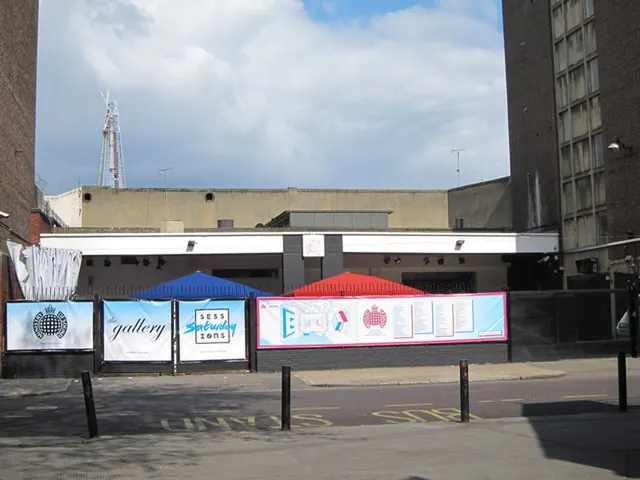
Photographs show the club before its 2026 refurbishment. Credits, original file pages and reuse licences are linked in the captions. Corrections with supporting sources are welcome at moderator@essentialmixindex.com.